

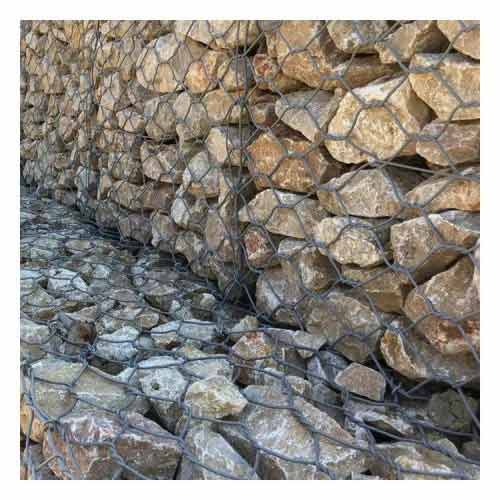
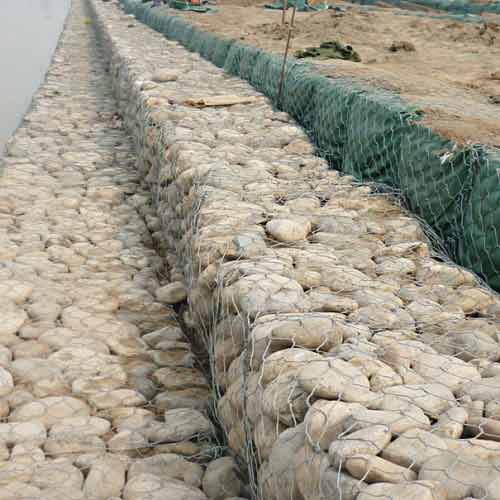
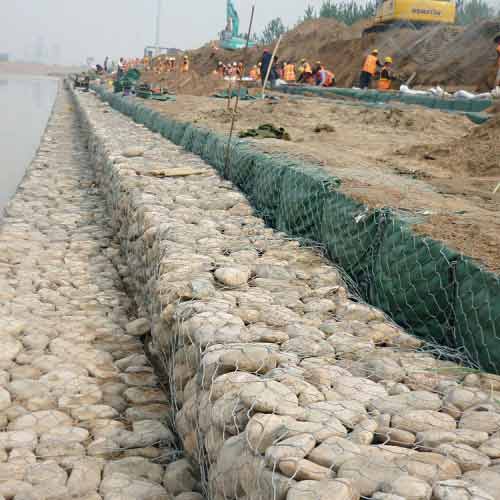
Gabion basket foundations provide engineered earth retention and structural support solutions through wire mesh containers filled with stone aggregate creating gravity-based support systems with superior drainage capabilities and environmental compatibility. These foundation systems utilize galvanized steel wire mesh conforming to ASTM A975 specifications with hexagonal openings measuring 3 x 3 inches or 4 x 4 inches, providing structural integrity while allowing drainage and vegetation growth. Wire specifications include minimum tensile strength of 75,000 PSI with zinc coating weights of 1.5-2.0 oz/sq ft ensuring 30-50 year service life in buried applications. Basket construction employs rectangular configurations with modular dimensions typically 3 x 3 x 6 feet or larger, connected through helical tie wires or mechanical fasteners ensuring structural continuity throughout foundation systems. Stone fill materials utilize angular rock meeting ASTM D448 specifications with sizes ranging 4-8 inches, providing drainage pathways and structural interlock while preventing settlement and washout. Installation procedures involve excavation to suitable bearing strata, placement of geotextile fabric for soil separation, basket assembly and alignment, controlled stone filling with mechanical compaction, and cap placement for structural continuity.
Engineering advantages include superior drainage preventing hydrostatic pressure buildup, flexibility accommodating differential settlement, and environmental integration through natural stone appearance and vegetation establishment capabilities. Applications encompass retaining walls, bridge abutments, channel linings, slope stabilization, and foundation support where conventional concrete foundations are impractical or environmentally sensitive. Structural performance includes load distribution through gravity-based weight, resistance to lateral earth pressures through friction and internal angle of repose, and durability against freeze-thaw cycling without deterioration. Construction benefits include utilization of local stone materials reducing transportation costs, on-site assembly reducing construction time, and minimal equipment requirements compared to concrete foundation alternatives. Quality assurance includes wire tensile strength verification, coating thickness testing, and stone gradation compliance ensuring structural performance. Environmental considerations include natural drainage, habitat creation potential, and sustainable practices utilizing local materials with minimal environmental impact during construction.
-
2026-03-13Blending structural utility with aesthetic innovation, the gabion basket bench transforms raw engineering into inviting outdoor furniture. By filling wire cages—typically made of galvanized or PVC-coated steel—with local stone, gravel, or recycled glass, designers create durable, permeab
-
2026-03-12Welded wire gabion represents a sophisticated earth retention and construction solution that combines the structural strength of steel wire with the aesthetic flexibility of natural stone fill, creating installations that are as beautiful as they are functional. Unlike traditional rock ret
-
2026-03-11Modern landscape design often seeks to blend structural utility with natural aesthetics, and gardens gabion baskets have emerged as a perfect medium for this fusion. These wire containers, filled with rocks, stones, or recycled materials, offer a versatile solution for building retaining w