
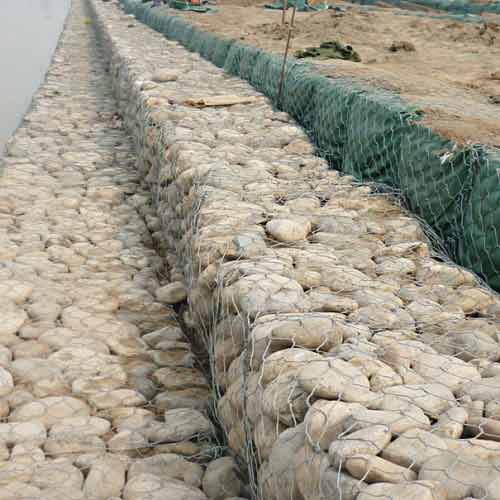
Gabion baskets—wire mesh containers filled with rocks, gravel, or concrete blocks—have become a preferred solution for river bank stabilization, flood mitigation, and shoreline reinforcement due to their flexibility, permeability, and ecological compatibility. Unlike rigid concrete retaining walls that can exacerbate erosion downstream, gabions allow water to pass through while dissipating energy, reducing scour and promoting sediment deposition. This natural hydraulic behavior makes them ideal for restoring degraded riparian zones, protecting infrastructure, and integrating seamlessly with local ecosystems without disrupting aquatic habitats.
The engineering versatility of gabion baskets enables tailored designs for diverse hydrological conditions. For steep banks prone to slumping, stacked gabion tiers act as gravity-retaining structures that absorb lateral pressure while accommodating settlement. In high-flow channels, gabions can be arranged in stepped formations or aligned parallel to the current to deflect flow away from vulnerable embankments. Coastal applications benefit from gabions’ ability to withstand wave action and tidal fluctuations, often combined with vegetative planting to enhance root cohesion and long-term slope stability. Modular construction allows rapid deployment and easy repair, making gabions suitable for emergency response scenarios such as post-flood restoration or landslide remediation.
Material selection and installation techniques significantly influence gabion performance. High-quality galvanized or PVC-coated steel wire mesh resists corrosion and UV degradation, extending service life in harsh environments. Stone fill must be angular, well-graded, and locally sourced to ensure interlocking and minimize voids, which enhances structural integrity and filtration efficiency. Proper anchoring to the bank substrate using tie-back rods or foundation trenches prevents uplift during floods, while geotextile liners beneath the baskets improve soil retention and prevent fine sediment migration. Skilled labor and precise placement are critical to achieving optimal hydraulic and structural outcomes.
Beyond erosion control, gabion systems contribute to sustainable water management by facilitating groundwater recharge, reducing turbidity, and supporting biodiversity. Vegetation can grow through and around gabions, creating habitat corridors for insects, birds, and small mammals while stabilizing slopes with deep-rooted plants. Municipalities and conservation agencies increasingly adopt gabions as part of green infrastructure initiatives, recognizing their dual role in mitigating flood risk and enhancing ecological resilience. When designed and maintained correctly, gabion baskets offer a durable, cost-effective, and environmentally harmonious approach to managing riverine landscapes in an era of climate uncertainty.
-
2026-03-13Blending structural utility with aesthetic innovation, the gabion basket bench transforms raw engineering into inviting outdoor furniture. By filling wire cages—typically made of galvanized or PVC-coated steel—with local stone, gravel, or recycled glass, designers create durable, permeab
-
2026-03-12Welded wire gabion represents a sophisticated earth retention and construction solution that combines the structural strength of steel wire with the aesthetic flexibility of natural stone fill, creating installations that are as beautiful as they are functional. Unlike traditional rock ret
-
2026-03-11Modern landscape design often seeks to blend structural utility with natural aesthetics, and gardens gabion baskets have emerged as a perfect medium for this fusion. These wire containers, filled with rocks, stones, or recycled materials, offer a versatile solution for building retaining w