
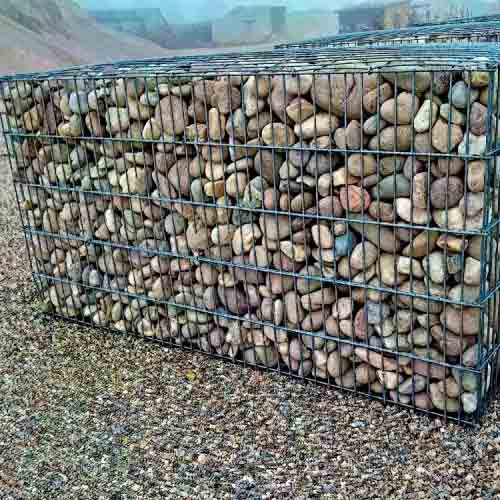
Sustainable gabion design represents a convergence of civil engineering and ecological restoration, offering a green alternative to traditional concrete and masonry retaining walls. Gabions are wire mesh baskets filled with rock or stone, used for erosion control, slope stabilization, and landscape architecture. Unlike impermeable concrete walls, gabions are permeable structures that allow water to drain through naturally, reducing hydrostatic pressure and preventing the buildup of groundwater behind the wall. This natural drainage capability minimizes the risk of wall failure during heavy rains and helps maintain the local water table, making them ideal for flood-prone areas and riverbank protection.
The environmental benefits of gabions extend beyond water management. The use of locally sourced stone significantly reduces the carbon footprint associated with transporting heavy building materials. In many cases, the stones used for filling can be excavated directly from the construction site, eliminating the need for industrial quarrying or the production of cement, which is a major global producer of CO2. Furthermore, the wire mesh is typically made from galvanized steel or PVC-coated steel, both of which are highly recyclable at the end of the structure's life. The longevity of these materials ensures that the structure does not need frequent replacement, reducing construction waste over time.
From a biological perspective, gabions act as artificial habitats that promote biodiversity. The voids between the rocks provide shelter for small mammals, reptiles, and insects. In aquatic environments, gabion walls serve as ideal substrates for fish spawning and macroinvertebrate colonization, which are essential for a healthy ecosystem. Unlike smooth concrete, the rough texture of the rocks allows for the natural growth of vegetation on and around the structure. Plants can root in the crevices, eventually covering the wire mesh with a layer of greenery that blends the structure into the landscape and provides food for herbivores.
Flexibility is a key sustainable feature of gabion design. Because the structure is composed of individual baskets wired together, it can withstand significant ground movement and seismic activity without cracking. Rigid concrete walls tend to fracture under differential settlement or earthquake loads, leading to costly repairs. Gabions, however, settle and adjust to the terrain dynamically. This resilience reduces the need for heavy foundation preparations and extensive excavation, preserving the natural topography of the site. This adaptability makes them particularly useful for stabilizing unstable slopes where rigid structures would fail.
Aesthetic integration is another aspect of sustainability, as gabions can be designed to look natural and non-intrusive. The rustic appearance of stone-filled cages fits seamlessly into parklands, gardens, and natural reserves, avoiding the visual pollution of gray concrete. In urban settings, "green gabions" can be used as planters or noise barriers, where the internal voids are filled with soil and planted with shrubs or grasses. This dual function—structural support combined with landscaping—maximizes the utility of the space, a core principle of sustainable development.
Finally, the lifecycle cost of gabions is often lower than traditional structures due to their durability and low maintenance requirements. While the initial material cost might be competitive with concrete, the savings in foundation work and the lack of need for expansion joints or drainage pipes reduce overall project costs. Maintenance involves little more than inspecting for wire corrosion or displacing stones, which can be easily repaired by hand without heavy machinery. By mimicking natural geological formations, sustainable gabion design offers a resilient, cost-effective, and ecologically sound solution for modern infrastructure challenges.
-
2026-03-13Blending structural utility with aesthetic innovation, the gabion basket bench transforms raw engineering into inviting outdoor furniture. By filling wire cages—typically made of galvanized or PVC-coated steel—with local stone, gravel, or recycled glass, designers create durable, permeab
-
2026-03-12Welded wire gabion represents a sophisticated earth retention and construction solution that combines the structural strength of steel wire with the aesthetic flexibility of natural stone fill, creating installations that are as beautiful as they are functional. Unlike traditional rock ret
-
2026-03-11Modern landscape design often seeks to blend structural utility with natural aesthetics, and gardens gabion baskets have emerged as a perfect medium for this fusion. These wire containers, filled with rocks, stones, or recycled materials, offer a versatile solution for building retaining w