
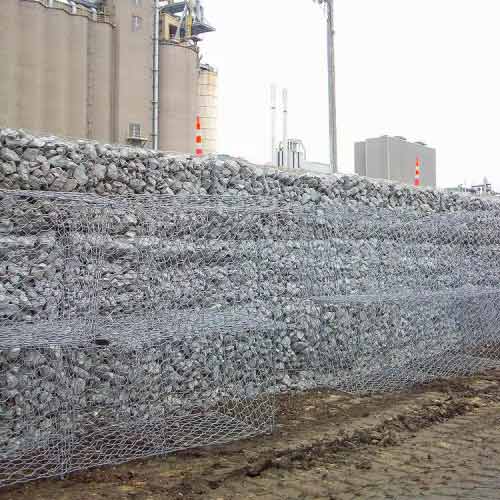
Gabion baskets—wire mesh containers filled with stones—have moved from civil engineering staples to versatile urban design elements. Their combination of strength, permeability, and natural aesthetics makes them invaluable in city planning, public spaces, and infrastructure projects seeking sustainable, resilient solutions.
In city planning, gabions stabilize slopes and prevent erosion along highways, railways, and riverbanks within urban areas. Their permeable structure allows water to drain freely, reducing hydrostatic pressure and minimizing flood risk. As retaining walls, they blend into landscapes without the monotony of concrete, supporting vegetation growth that enhances urban greenery.
Public spaces benefit from gabions as seating walls, planters, and landscape dividers. The stone-filled cages provide robust seating that doubles as a visual feature, while integrated planting pockets foster biodiversity in parks and plazas. Their modular nature enables creative configurations, from curved benches to tiered terraces, adding texture and earthy tones to otherwise hardscaped areas.
Infrastructure development leverages gabions for noise barriers and foundation protection. Along busy roads, stacked gabions absorb sound effectively due to their mass and irregular surfaces. Under bridges or around utility structures, they dissipate energy from water flow or minor seismic events, protecting critical assets. Their ability to be locally sourced (using regional stone) cuts transportation emissions and costs.
Environmental performance is a key advantage. Gabions use natural, often recycled materials, avoiding the carbon footprint of manufactured blocks. Permeability supports groundwater recharge, and their rough surfaces provide habitat for insects and small wildlife, contributing to urban ecology. Maintenance is minimal—stones rarely degrade, and occasional checks for mesh corrosion suffice.
Design flexibility completes their appeal. Available in various mesh sizes and finishes, gabions adapt to modern and traditional aesthetics. Illuminated gabions with embedded LEDs create dramatic nighttime features, while plant-covered versions merge hardscape with softscape seamlessly. In urban contexts, gabions exemplify how utilitarian structures can enrich public realm design while delivering ecological and structural benefits.
-
2026-03-13Blending structural utility with aesthetic innovation, the gabion basket bench transforms raw engineering into inviting outdoor furniture. By filling wire cages—typically made of galvanized or PVC-coated steel—with local stone, gravel, or recycled glass, designers create durable, permeab
-
2026-03-12Welded wire gabion represents a sophisticated earth retention and construction solution that combines the structural strength of steel wire with the aesthetic flexibility of natural stone fill, creating installations that are as beautiful as they are functional. Unlike traditional rock ret
-
2026-03-11Modern landscape design often seeks to blend structural utility with natural aesthetics, and gardens gabion baskets have emerged as a perfect medium for this fusion. These wire containers, filled with rocks, stones, or recycled materials, offer a versatile solution for building retaining w